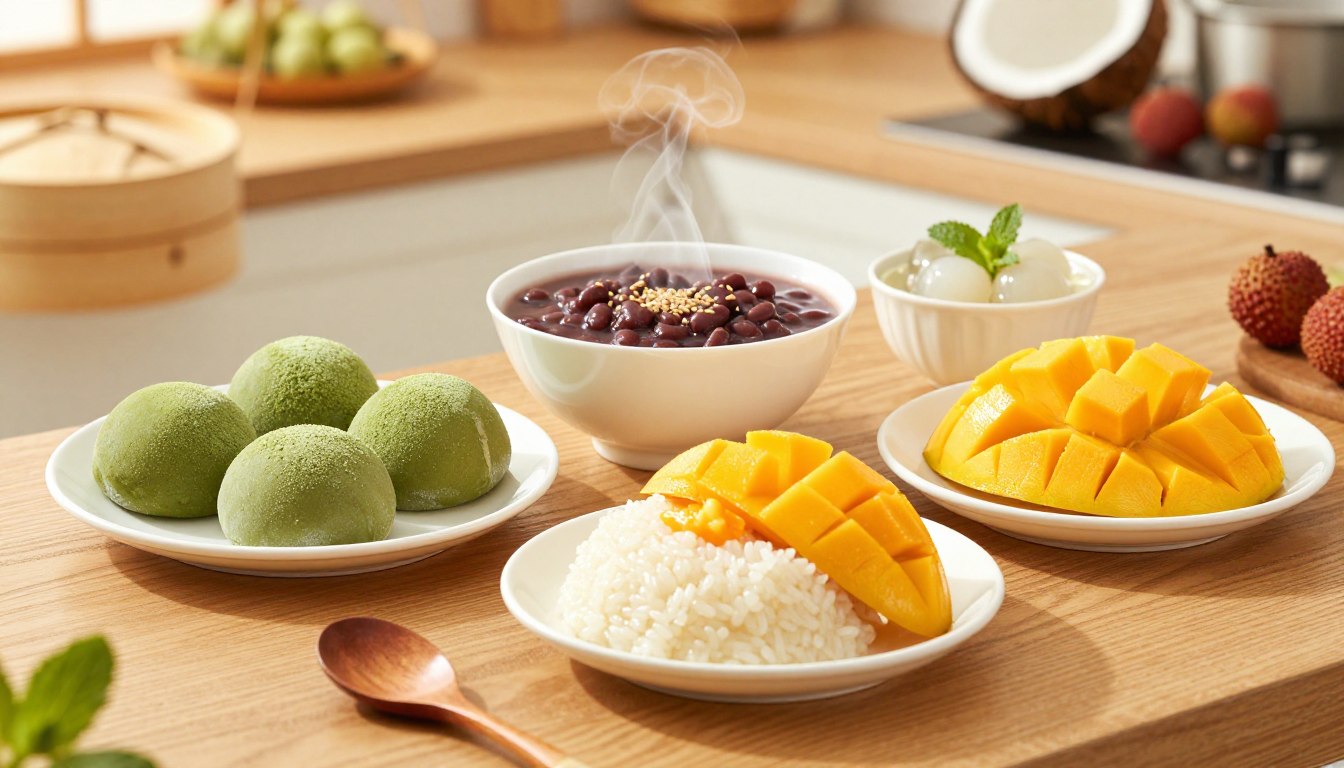
Easy Asian Dessert Recipes You Can Make at Home
Table of Contents
Did you know over 60% of home bakers find Asian desserts easier than European pastries? Asian desserts mix simplicity with unique flavors. They can make your home baking fun.
Imagine making top-notch sweet treats at home without being a pro. These recipes are for home cooks who want to try Asian desserts. They use simple ingredients and easy steps.
You’ll find recipes like Japanese souffle cheesecake and Thai mango sticky rice. They’re easy to make and taste amazing. Each recipe has clear steps to help you make traditional Asian desserts.
Whether you’re new to baking or an experienced cook, these recipes will excite you. You’ll make sweet treats that wow your family and friends. They mix cultural flavors with easy home cooking.
Why Asian Desserts Are Perfect for Home Bakers
Exploring Asian desserts is a fun journey for home bakers. It’s a chance to make amazing treats with easy ingredients. You don’t need to be an expert to enjoy this.
Simple Ingredients You Already Have
Asian desserts use common items you might already have. Think rice flour, coconut milk, and mango. These ingredients make baking a special experience.
- Naturally gluten-free options
- Minimal specialized equipment required
- Recipes that welcome culinary creativity
Less Sugar, More Natural Flavors
Asian sweets are different from Western ones. They focus on balanced sweetness and natural ingredients. Ingredients like condensed milk and sesame seeds add flavor without too much sugar.
| Ingredient | Flavor Profile | Nutritional Benefit |
|---|---|---|
| Rice Flour | Neutral, subtle | Gluten-free, easily digestible |
| Coconut Milk | Rich, creamy | Healthy fats, dairy-free |
| Mango | Sweet, tropical | High in vitamins |
Try making Asian desserts at home. You’ll see your baking skills grow. These recipes are easy, tasty, and rewarding.
Essential Ingredients for Making Asian Dessert
Making authentic Asian desserts starts with knowing the key ingredients. Your pantry might already have some of these special components. They bring magic to traditional sweets.
Many Asian desserts rely on a few staple ingredients. Sweet rice flour (mochiko) is a key element. It’s used to make delicate mochi and other chewy treats.
- Sweet rice flour (mochiko)
- Matcha powder
- Coconut milk
- Condensed milk
- Cream cheese
Tropical fruits like mangoes add sweetness to many Asian desserts. Ingredients like tapioca pearls and agar-agar give unique textures. These textures make Asian desserts different from Western sweets.
| Ingredient Category | Common Examples | Typical Use |
|---|---|---|
| Thickening Agents | Cornstarch, Rice Flour | Creating smooth, creamy textures |
| Flavor Enhancers | Matcha, Sesame Seeds | Adding depth and unique taste |
| Binding Ingredients | Cream of Tartar, Gelatin | Providing structure to desserts |
Don’t be intimidated by these specialty ingredients. Many Asian grocery stores now stock them. Online shopping makes them even more accessible. Experimenting with these ingredients can transform your home baking into an exciting culinary adventure!
Japanese Souffle Cheesecake: A Foolproof Recipe
Discover the magic of Japanese souffle cheesecake. It’s a dessert that combines the best of dense cheesecakes and airy chiffon cakes. This treat is so light, it melts in your mouth, making your baking skills shine.
Understanding the Cotton-Like Texture
The secret to this cheesecake’s lightness is in the technique. You need to master egg white meringue and gentle folding. These steps turn simple ingredients into a dessert that seems to defy gravity.
Complete Recipe and Ingredients
- 5 eggs (separated)
- 8 oz cream cheese
- 1/4 cup butter
- 1/2 cup milk
- 1/4 cup + 1/4 cup sugar
- 2 tbsp cornstarch
- 1/4 cup flour
- 1/4 tsp cream of tartar
Step-by-Step Baking Instructions
The baking method is key to a perfect souffle cheesecake. Start at 330°F for 25 minutes. Then, lower the temperature to 245-265°F and bake for 45 minutes in a bain-marie. Important techniques include:
- Separate eggs carefully
- Beat egg whites to stiff peaks
- Create a smooth cream cheese base
- Fold meringue gently to maintain volume
Troubleshooting Common Problems
| Issue | Solution |
|---|---|
| Cracking | Adjust oven temperature, beat egg whites to medium peaks |
| Dense Bottom | Ensure thorough mixing, use gentle folding technique |
| Deflated Cake | Control temperature, avoid over-mixing |
| Uneven Browning | Use consistent oven temperature, rotate pan midway |
Follow these tips to make a Japanese souffle cheesecake that’s light and irresistible. Temperature control and gentle handling are your keys to success!
Mango Sticky Rice: Thailand’s Beloved Sweet Treat

Explore the enchantment of a classic Thai dessert that turns simple ingredients into a work of art. Mango recipe sticky rice is a perfect mix of sweet and creamy. It will take you on a journey to Bangkok’s lively streets.
The key to making real mango sticky rice is in the preparation of glutinous rice. Start by soaking the rice to remove its starchy coating. This step is crucial. It helps the rice soak up moisture, giving it a unique sticky texture.
- Choose perfectly ripe, golden mangoes
- Soak glutinous rice for at least 4 hours
- Use fresh coconut milk for authentic creaminess
- Cook rice until it becomes soft but not mushy
Cooking the rice with coconut milk makes it creamy and special. To make the mango topping, cook diced ripe mangoes with sugar until they’re thick and rich. Finish with fresh mango slices for a beautiful presentation.
“Mango sticky rice is not just a dessert, it’s a celebration of Thai culinary artistry.” – Bangkok Street Food Magazine
| Ingredient | Quantity | Purpose |
|---|---|---|
| Glutinous Rice | 1 cup | Base of the dessert |
| Coconut Milk | 1 cup | Adds creaminess |
| Ripe Mangoes | 2 pieces | Sweet topping |
| Sugar | 2 tbsp | Enhances sweetness |
Pro tip: This dessert is naturally gluten-free and can be easily made vegan by adjusting the coconut milk ratio. With a little practice, you’ll create an authentic Thai dessert that rivals those found in the best Bangkok restaurants.
Quick and Easy Mochi Recipes
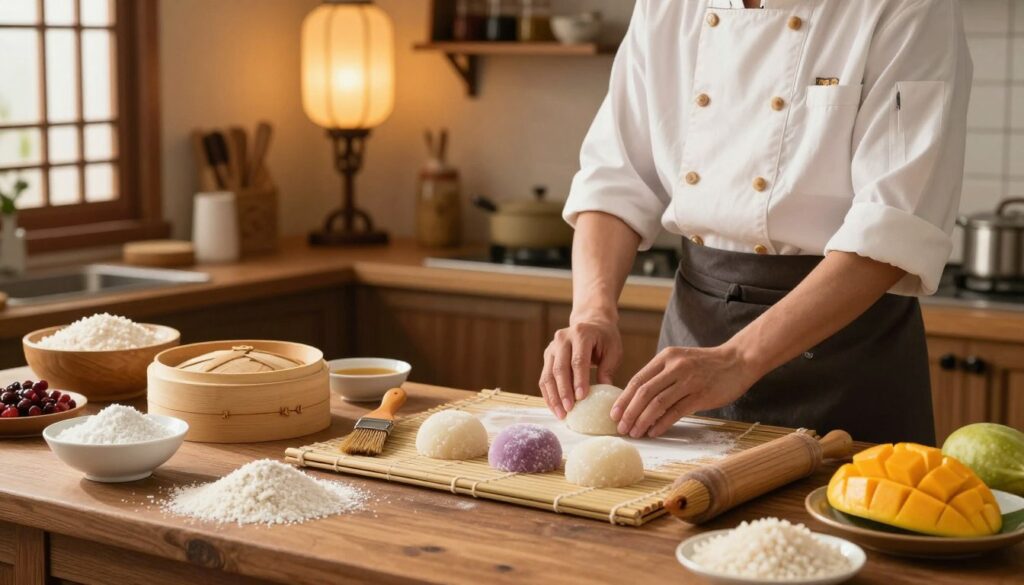
Explore the world of Asian desserts with these simple mochi recipes. They bring authentic flavors to your kitchen. Mochi desserts are great for home bakers wanting to try Japanese sweets. They are gluten-free and super tasty.
Mochi is a favorite dessert for many. It has a unique texture that’s soft yet chewy. Making these traditional Japanese sweets at home is surprisingly easy.
Mini Mochi Cakes with Crispy Edges
Mini mochi cakes are a delightful treat. They have a gooey inside and crispy outside. This gluten-free dessert is made with sweet rice flour.
- Use sweet rice flour for authentic texture
- Create crispy edges by careful baking
- Keep the recipe simple and not too sweet
Matcha Green Tea Mochi
Matcha green tea mochi adds a vibrant color and unique flavor to your desserts. It gets its green color from matcha powder and creamy texture from coconut milk. This treat is very sticky and moist, with a true Asian taste.
- Select high-quality matcha powder
- Use coconut milk for extra creaminess
- Achieve the perfect sticky texture
“Mochi is not just a dessert, it’s an experience of texture and flavor.” – Japanese Culinary Tradition
With these recipes, you’ll learn to make delicious mochi like a Japanese bakery. Try different fillings and toppings to make these recipes your own!
No-Bake Asian Desserts for Busy Days
Craving something sweet but short on time? Asian desserts are the answer. They’re easy to make and pack a big flavor punch. Perfect for those who want to wow without spending hours cooking.
Chinese Mango Pudding: A Refreshing Delight
Chinese mango pudding is a breeze to make. Just blend fresh mango, milk, sugar, cream, and gelatin. It turns ripe mangoes into a smooth, creamy delight.
- 2 ripe mangoes
- 1/2 cup milk
- 1/4 cup heavy cream
- 2 tablespoons sugar
- 1 packet gelatin
Mango Sago: Hong Kong’s Creamy Sensation
Mango sago from Hong Kong is a creamy, sweet treat. It’s made with mangoes, milk, and tapioca pearls. The result is a fruity, creamy texture that’s simply irresistible.
Pro tip: Use ripe, fragrant mangoes for the best flavor. The secret to great mango sago is cooking the tapioca pearls until they’re soft. This creates a perfect contrast with the mango cream.
Quick desserts don’t mean compromising on taste—these recipes prove that spectacular sweets can be effortless!
Traditional Asian Sweet Treats Worth Trying
Exploring traditional Asian desserts is a journey of unique flavors and textures. It will make your taste buds happy. From the Philippines to India, each place has amazing sweet treats that are different from Western desserts.
Let’s dive into some must-try traditional Asian desserts:
- Halo-halo: A Filipino layered dessert packed with ube, coconut, sweet beans, fresh fruit, and creamy ice cream
- Hodduk: A Korean sweet pancake filled with delicious cinnamon syrup
- Patbingsu: A refreshing Korean shaved ice dessert perfect for hot summer days
- Korean steamed pears drizzled with honey and topped with pine nuts
Indian desserts are also incredible. You’ll love Ladoos, traditional ball-shaped sweets that melt in your mouth. Or Ras Malai, a decadent Bengali dessert with soft cheese and sweet cream. And don’t miss Modak, an Indian sweet dumpling with a unique taste.
These desserts come from centuries of culinary tradition. They bring rich cultural experiences to your kitchen. With simple ingredients and straightforward techniques, you can make these amazing treats at home. Impress your friends and family with them.
Tips for Perfect Asian Desserts Every Time
Mastering Asian desserts needs precision and focus. Whether you’re new or skilled, knowing key techniques can make your desserts stand out.
Precision in Temperature Control
Temperature control is key for delicate Asian desserts, like Japanese cheesecake. The baking process needs exact heat:
- Start at 330°F for initial rising
- Reduce to 245-265°F for even baking
- Use an accurate oven thermometer
- Rotate pan midway for consistent heat distribution
Mixing Techniques Matter
Getting the right texture is all about how you mix the batter. Overmixing can make desserts flat, while undermixing leads to uneven textures.
| Mixing Stage | Key Technique | Recommended Action |
|---|---|---|
| Meringue Preparation | Gradually Increase Speed | Start low, progress to medium-high |
| Foam Stage | Add Cream of Tartar | Stabilizes egg whites |
| Sugar Incorporation | Add When White and Foamy | Ensures proper volume |
By using these precise techniques, you can make Asian desserts that look and taste like they came from a pro kitchen.
Conclusion
Asian desserts open a world of flavors for you to explore at home. By picking a recipe, gathering ingredients, and baking, you embark on a fun journey. At first, the techniques might seem hard, but with practice, you’ll become more confident.
Your loved ones will be amazed by your homemade Asian desserts. Each dessert is a taste of a different culture, like Japan’s souffle cheesecake or Thailand’s mango sticky rice. The secret is to be patient and excited about trying new things.
Even if your first try isn’t perfect, it will still taste great. Keep trying new recipes and techniques. Soon, you’ll be able to make delicious Asian desserts easily. Learning these recipes is more than cooking; it’s about connecting with old traditions.
Begin your baking journey today and fill your kitchen with Asia’s flavors. With every dessert you make, you’ll learn new skills and expand your cooking knowledge. You’ll enjoy tasty treats that take you on a journey through taste and texture.