Top Candied Yams : Ingredients, History & How They’re Made
Table of Contents
Growing up in a Southern kitchen, the smell of candied yams signaled the start of holidays. These sweet potatoes, covered in caramelized sugar, were more than a side dish. They were a family memory that brought generations together through taste and tradition.
Candied yams are a classic holiday recipe in American homes. They turn simple sweet potatoes into a rich side dish that feels like a warm hug. But, it’s important to note, they’re actually made from sweet potatoes, not true yams.
The magic of candied yams is in their preparation. Sweet potatoes are soaked in a sweet syrup, often with cinnamon, nutmeg, and cloves. As they bake, the edges get crunchy while the inside stays soft and sweet. This experience has delighted families for years.
Learning about candied ricipe is more than just a recipe. It’s a journey into a rich culinary tradition that shows the diversity of American cooking. From Southern kitchens to holiday tables everywhere, these sweet potatoes share a story of comfort, celebration, and love.
What Are Candied Yams and Why Are They So Popular
candied ricipe are a favorite at American holiday meals. But, they’re not actually yams. They’re made from sweet potatoes. Knowing the difference makes this sweet potato casserole even more special.
Exploring reveals a rich history. It’s a story that connects cultures and traditions.
Yams vs. Sweet Potatoes: A Culinary Confusion
Many think “yams are what we call candied ricipe. But true yams are quite different:
- Bark-like exterior
- White or pale flesh
- Starchy texture
- Less sweet flavor
Sweet potatoes, however, come in many colors and are sweeter. The orange ones are often called “yams” to make them stand out.
The Origin of the Name “Candied Yams”
The name “candied ricipe” holds deep cultural meaning. Enslaved Africans named these dishes yams to keep a link to their homeland. It was a way to hold onto their African roots.
“Food is more than sustenance—it’s a story of culture, survival, and memory.” – Unknown
Today,candied ricipe are still a beloved dish. They’re enjoyed at Thanksgiving and all year round. They bring people together with their sweet, comforting taste.
The Rich History and Origins of Candied Yams
candied ricipe are more than a Southern comfort food. They have a deep cultural heritage tied to African American traditions. This dish tells a story of resilience, creativity, and the bond between food and history.
African Roots and the Journey to America
The story of candied yams starts in West Africa, where sweet tubers were common. Enslaved Africans brought their cooking knowledge to America. They used American sweet potatoes, similar to their native yams, to create new dishes.
- West African cooking techniques preserved
- Sweet potatoes replaced traditional yams
- Culinary traditions survived through food preparation
How Enslaved Africans Created This Soul Food Classic
Enslaved Africans made candied ricipe by baking sweet potatoes. They made a sweet syrup with sugar, honey, or molasses. This way, they made the vegetables tasty and kept them fresh longer.
They turned limited ingredients into a delicious meal. This act of cooking was a way to preserve their culture. candied ricipe became a symbol of community, survival, and creativity in soul food.
candied ricipe represent more than food—they are a story of survival and cultural identity.
Today, sweet potato casserole are a cherished Southern comfort food. They connect generations through a shared tradition. This tradition celebrates the strength and creativity of African American culture.
Essential Ingredients for Making Candied Yams
To make perfect sweet potato casserole, start with the right ingredients. Your brown sugar glaze will turn regular sweet potatoes into a tasty holiday side dish. It’s something everyone will enjoy.
First, pick firm, unblemished sweet potatoes. They should be rich in color and without soft spots. For a big holiday meal, use about 4 pounds of sweet potatoes.
- Sweet Potatoes: 4 pounds, orange or yellow varieties work best
- Butter: 1/2 cup for richness
- Brown Sugar Glaze Components:
- Brown Sugar: 3/4 cup
- White Sugar: 1/2 cup
- Karo Light Corn Syrup: 1-1/4 cups
- Honey: 1/4 cup for depth of flavor
- Spices:
- Cinnamon: 1 tablespoon
- Nutmeg: 1/4 teaspoon
- Salt: 1/4 teaspoon
- Vanilla Extract: 2 tablespoons
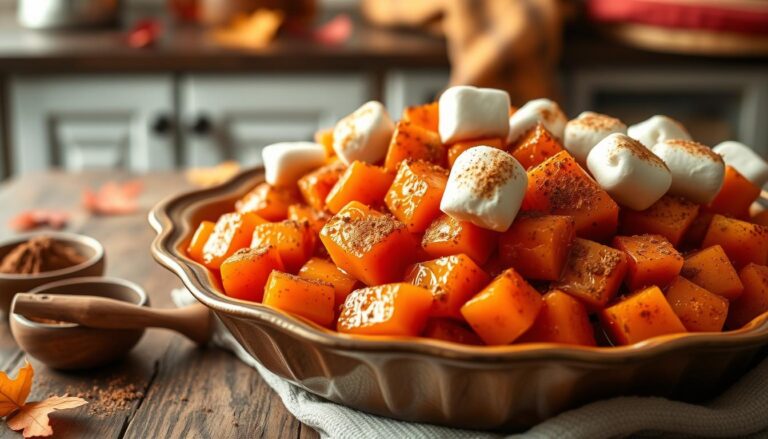
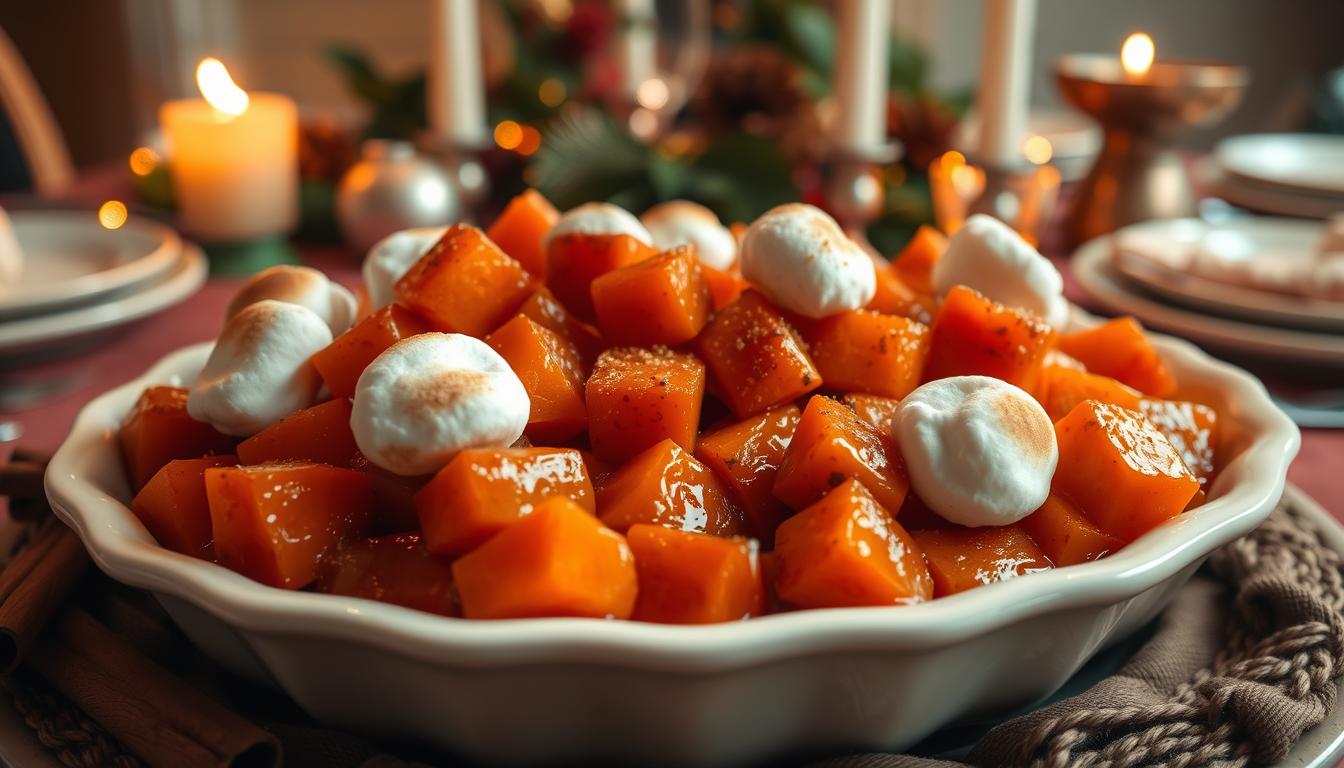
For a sweet touch, add marshmallow topping. Sprinkle mini marshmallows on top in the last few minutes of baking. This creates a golden, gooey layer that’s sweet and looks great.
Pro Tip: The key to an incredible brown sugar glaze is balancing sweetness with warm spices like cinnamon and nutmeg.
Every ingredient is important for the flavor and texture of sweet potato casserole. The sugars make a rich, caramelized coating. The spices add depth and warmth, making this dish a holiday favorite.
Traditional Methods for Preparing Candied Yams
Making perfect candied yams needs careful prep and knowing cooking methods. How you prepare baked yams affects the dish’s taste and texture.

There are two main ways to make Southern comfort food each with its own benefits. Knowing these methods helps you make the tastiest sweet potato dish for your guests.
The Boiling Method Versus Baking Raw
- Baking Raw Method:
- Slice sweet potatoes while firm
- Maintains better potato structure
- Needs more knife skills
- Offers precise cutting control
- Boiling Method:
- Partially cook sweet potatoes first
- Easier to slice
- Potatoes may break more easily
- Less control over potato shape
Creating the Perfect Candied Sauce
Your candied sauce is the heart of delicious baked yams. The right mix of ingredients turns simple sweet potatoes into a rich side dish.
| Ingredient | Purpose | Quantity |
|---|---|---|
| Corn Syrup | Creates glossy texture | 1/2 cup |
| Brown Sugar | Adds deep sweetness | 1/4 cup |
| Butter | Enhances richness | 4 tablespoons |
| Cinnamon | Provides warmth | 1 teaspoon |
Mix these ingredients in your baking dish. Make sure every sweet potato piece is covered in the rich candied sauce. The goal is to balance sweetness and get a caramelized finish that makes candied ricipe irresistible.
Step-by-Step Instructions for Making Classic Candied Yams
Making the perfect sweet potato casserole needs focus and some key steps. Your candied ricipe will be a hit at holiday meals with these detailed instructions.
- Start by peeling the sweet potatoes completely
- Cut the potatoes into 1-inch chunks for even cooking
- Soak the chunks in a salt and lemon juice bath to stop browning
- Soak for 10-15 minutes, then rinse well
To make a great brown sugar glaze, follow these important steps. Preheat your oven to 350°F and get your ingredients ready for the sweet potato casserole.
- Mix corn syrup, honey, and brown sugar in your baking dish
- Layer the sweet potato chunks in the sugary mix
- Add butter and sprinkle with cinnamon and other warm spices
- Cover with foil and bake for 90 minutes
The last steps are key for a glossy, caramelized glaze. Remove the foil for the last 30 minutes to caramelize the sugars and get a stunning finish.
| Ingredient | Quantity | Purpose |
|---|---|---|
| Sweet Potatoes | 4-5 large | Main ingredient |
| Brown Sugar | 1 cup | Creates glaze |
| Butter | 1/2 cup | Adds richness |
| Corn Syrup | 1/4 cup | Enhances sweetness |
Your homemade sweet potato casserole will dazzle with a beautiful brown sugar glaze. Remember, patience and careful prep are the secrets to perfect candied yams.
Regional Variations and Modern Twists on the Recipe
Southern comfort food have evolved from a traditional Southern dish to a creative canvas. Each region and family adds its own special touch. This makes candied yams a dynamic and exciting part of American cuisine.

Southern Style with Pecans and Marshmallow Topping
In the South, get a special treat. Chopped pecans add a nice crunch. The marshmallow topping makes it golden and gooey.
- Sprinkle chopped pecans before final baking
- Add small marshmallows during last few minutes of cooking
- Broil briefly to create a caramelized topping
Contemporary Flavor Combinations
Modern chefs are making candied their own. They use purple sweet potatoes and savory ingredients. These new ideas give the classic recipe a fresh twist.
- Experiment with different sweet potato varieties
- Add crispy bacon for a smoky twist
- Incorporate goat cheese for creamy complexity
- Use fresh orange juice for citrus balance
These modern takes show candied yams’ versatility. Whether you like the classic marshmallow topping or new flavors, there’s a version for you.
Serving Suggestions and Perfect Pairings for Your Holiday Table
When planning your holiday recipe lineup, candied yams shine brightest when paired strategically with complementary dishes. This beloved Thanksgiving side dish works magic when balanced with savory main courses and nutritious vegetables.
The traditional soul food approach recommends serving candied recipe alongside protein-rich main dishes that offer a delicious contrast to their sweetness. Consider these perfect protein pairings:
- Oven-roasted whole chicken
- Slow cooker smothered turkey wings
- Baked ham
- Fried chicken
To create a balanced holiday plate, pair your candied yams with green leafy vegetables. These nutritious sides help offset the sweetness and provide essential nutrients. Recommended vegetable companions include:
- Southern collard greens with smoked turkey
- Southern-style green beans
- Stove-top cabbage with tender smoked turkey
For a truly memorable holiday recipe experience, round out your menu with classic Southern sides like baked macaroni and cheese, cornbread, and dinner rolls. These additional dishes will create a harmonious meal that satisfies every palate.
Pro tip: Serve your recipe in an attractive casserole dish, garnish with fresh herbs or pecans, and keep the dish covered to maintain warmth until serving time.
Storage Tips and Reheating Your Candied Yams
Enjoying candied recipe is even better when you know how to store and reheat them. This way, you can enjoy every last bite. Whether you’re saving leftovers or preparing ahead, these tips will help keep your candied yams fresh and tasty.
Proper Leftover Storage Techniques
Storing candied yams right is key to keeping their flavor and texture. Here are the important steps to follow:
- Cool the candied ricipe to room temperature before storing
- Use airtight containers or heavy-duty aluminum foil
- Refrigerate within two hours of cooking
| Storage Method | Duration | Best Practices |
|---|---|---|
| Refrigerator | 3-4 days | Use sealed container, cover completely |
| Freezer | Up to 3 months | Use freezer-safe bag, remove excess air |
Reheating Methods for Perfect Candied Yams
Here are the best ways to warm up your candied yams:
- Oven Method: Bake at 350°F for 20-25 minutes, covered
- Skillet Method: Warm on low heat, stirring occasionally
- Microwave Method: Heat at 50% power, stirring every minute
“The key to great leftovers is maintaining the original dish’s moisture and flavor.” – Culinary Expert
By using these storage and reheating tips, you can turn your candied ricipe into a holiday treat. Enjoy them throughout the season.
Conclusion
candied ricipe are more than just a holiday recipe. They connect us to a deep cultural heritage that spans many generations. From the kitchens of enslaved Africans to today’s family dinners, these yams share a powerful story of culinary innovation and survival.
When you make this dish, you join a long-standing culinary tradition. You can stick to the classic Southern style or try new flavors. Either way, you’re keeping American food history alive. Each bite is a tribute to those who turned simple ingredients into something amazing.
The story of candied ricipe shows how traditional recipes can change yet stay true. From West Africa to American holidays, this dish has grown while keeping its core. By learning its history and mastering its making, you’re part of a story that celebrates cultural strength and creativity.
Exploring candied ricipe is more than cooking—it’s honoring a tradition that brings families together. Serve this dish with pride, knowing you’re sharing a story that has been passed down through generations.